
Well, I’ve just had 24 hours of challenges at sea that I feel completed to document as I’ve been extremely lucky and learned some valuable lessons.
Yesterday, after having enjoyed Christmas with my very good friends at their parent’s house near Crash Boat Beach in North Western Puerto Rico, I set out to single-hand Nakee North around 90 miles around the top of Puerto Rico to sail back to Fajardo, on the North East coast so I could visit the chandlery there. There wasn’t much wind in the lee of the island, so I was motor-sailing to get around to the North side of P.R. and hopefully find some wind. It was around noon and I happened to notice that the battery bank’s state of charge, which I display on the chart plotters, wasn’t increasing, even though the main engine was running. Wondering what was wrong, I then checked the amp meter, and sure enough, the battery was discharging 30 amps and not charging at 40 or 50 amps as it normally should be.
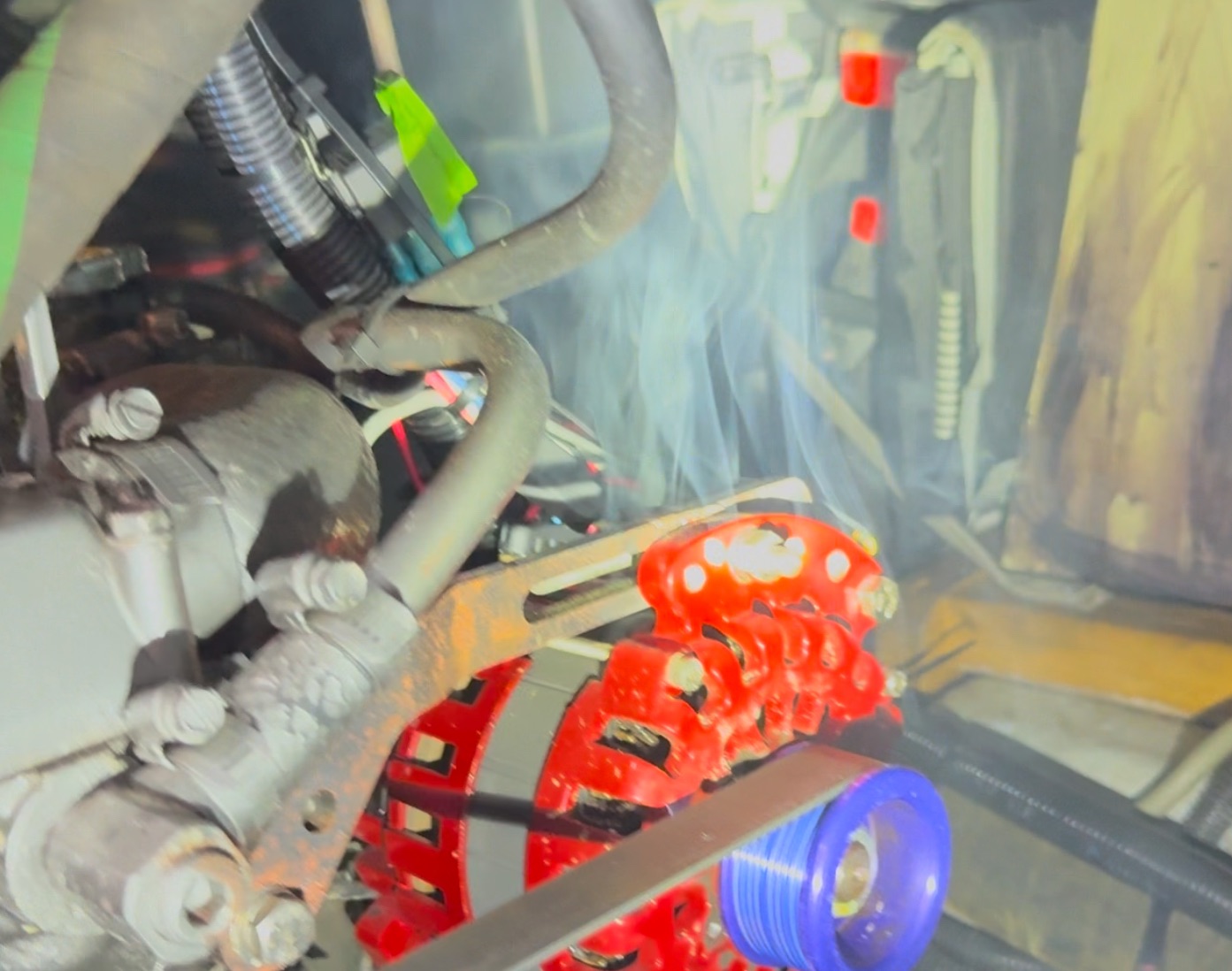
So, curious as to what might be going wrong, I opened up the engine bay to look into the engine room and was startled to see it full of smoke. The Balmar XT 170 alternator I had professionally installed in November 2023 at Darthaven Marina in the UK, was smoking and about to burst into flames. All of the smoke detector alarms in the boat started going off and I immediately shut down the engine.
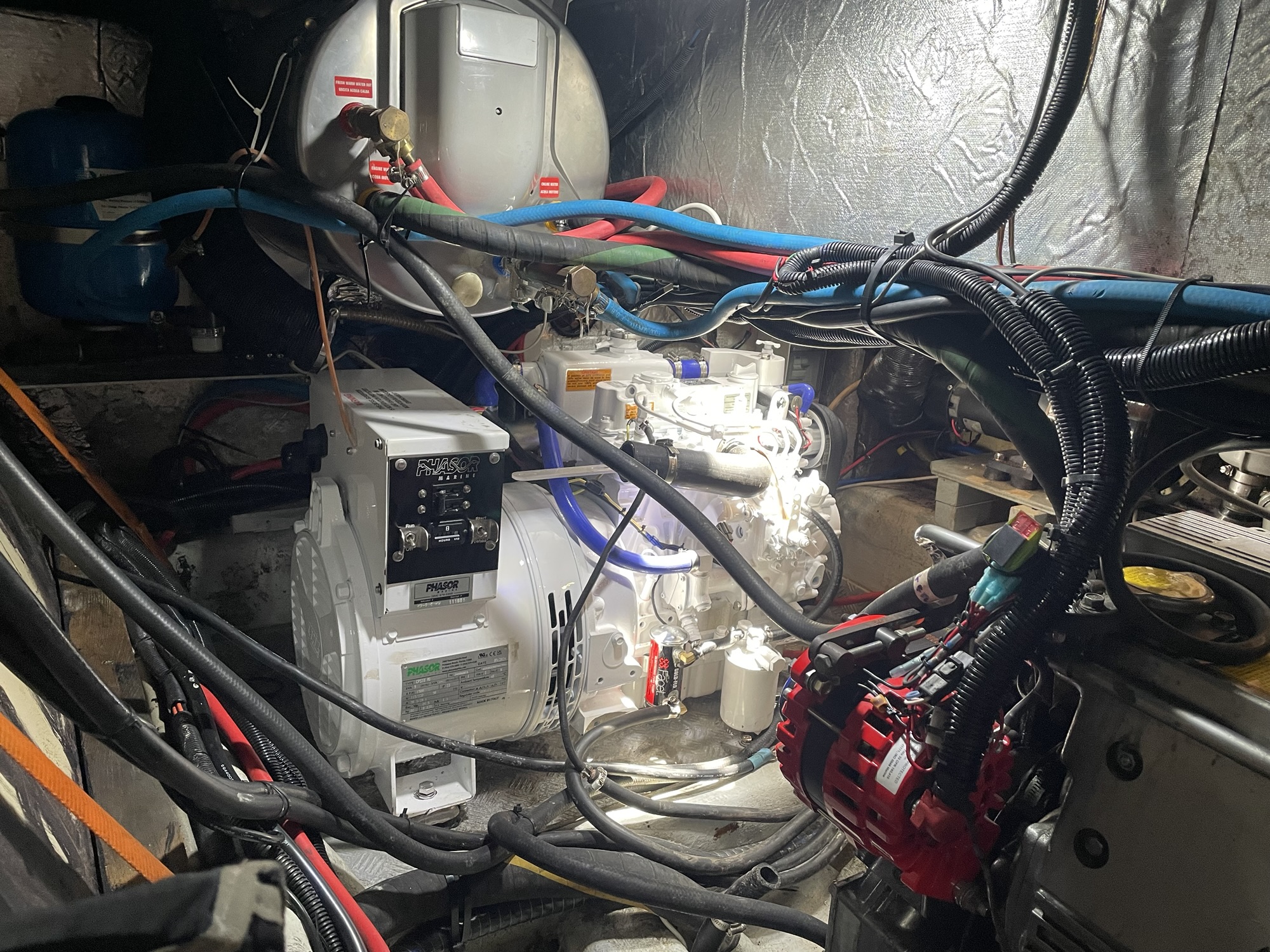
After things cooled down, I climbed into the engine room (no easy feat at sea) and saw it had been very hot, paint and labels showing signs of being burnt. I disconnected all of the wires to it and tried to re-start the engine, but it would only turn over once and then stop. I bridged the generator and engine start batteries together, and then the engine started, but the J10 ridged “serpentine” belt instantly started smoking, indicating that the bearings in the alternator had seized up, which was preventing the engine from turning over with its usual start battery.
So there I was, with no way to run the engine and having just started out on a 90 mile passage.
I decided that the best course of action would be to try and sail to South Western P.R to Puerto Real, where a local electrician had been recommended to me. However, there was no wind, so I spent all day drifting slowly South and when the sun set, I had to turn the boat and sail West, away from land with the rocks and reefs that make the approach to Puerto Real dangerous to navigate.
This morning at 4:00 am I got the boat sailing back East again, but just as I was navigating through the rocks and reefs approaching Puerto Real, a squall came through reducing visibility and requiring me to reef.
Finally, at about noon local time, under heavily reefed mainsail and a reefed staysail, I managed to sail slowly though the shallows at the entrance to Puerto Real, beat upwind in the harbour and anchor under sail – something I’d only done on training boats, never single-handed or on Nakee.
It has been a nerve wracking 24 hours, but I’m glad I spent the night offshore and only attempted to sail into Puerto Real in daylight – there are a few shipwrecks and mooring balls in the harbour here here that would be hard to see in the dark (no moon last night).
I consider myself very lucky that I found the alternator problem before it caught the boat on fire – I would have probably lost the yacht and been in the life raft – fires at sea are very dangerous.
I’ve already ordered (for $1,300) a new identical Balmar Alternator and raised a warranty claim with Balmar to replace the seized up one – I now want to carry a spare. Hopefully the local electricians and/or Balmar will be able to figure out why the alternator seized up in the first place, when they install the new one.
Another lesson is that I want to get a serpentine belt tensioner and install it on the engine, so if this happens again, I can move the belt off the alternator and on to the tensioner. That way I could run the main engine even without the alternator.
I will be spending New Years and the next week or two here until I get the new alternator installed and the engine running, before re-starting the passage to Fajardo, then back to Culebra and in February to the British Virgin Islands.
They say one definition of sailing is “fixing boats in exotic locations”, there is truth in that!
Yikes ! Close call indeed ! Glad you sniffed that one out and snuffed it !